
Search Iowa County Bankruptcy Records
Iowa County bankruptcy records move through both county and federal systems, so the best search starts with the office that actually holds the record you want. The county clerk of circuit court handles local court records, while the Western District of Wisconsin handles the federal bankruptcy case. That split matters because a county judgment docket, a local case file, and a bankruptcy filing can all show up in the same research trail. This page keeps the path simple. Use the county office for Iowa County court records, WCCA for the statewide docket, and the bankruptcy court for the federal file.
Iowa County Bankruptcy Records Overview
Iowa County Bankruptcy Records Office
The Iowa County Courthouse houses the Clerk of Courts at 222 North Iowa Street in Dodgeville, Wisconsin 53533-1548. The clerk is Lia Leahy, and the office phone is (608) 935-0395. The courthouse page confirms that the clerk office and related offices are housed in the courthouse. That makes the office the right place to ask about county court records, the judgment and lien docket, and other papers that live in the local system before a federal bankruptcy filing changes the track.
The official county page at Iowa County Clerk of Courts is the simplest place to confirm the office address and the courthouse location. It is also a useful anchor when you need to send a written request or verify that the clerk office is the right office before you drive to Dodgeville. In Iowa County, that official county page is the clean starting point for any record search that begins with local court work.
The Wisconsin Court System clerk directory repeats the same contact details: Lia Leahy at 222 N Iowa St, Dodgeville, WI 53533-1548, phone (608) 935-0395. That second official source matters when you need to confirm the address for a mailed request or if you are checking an old note with only part of the contact information. The Iowa County law library page also lists the clerk, probate, and victim and witness offices, so the local court map is easy to follow once you know the county name.
See the county clerk page here: Iowa County Clerk of Courts.
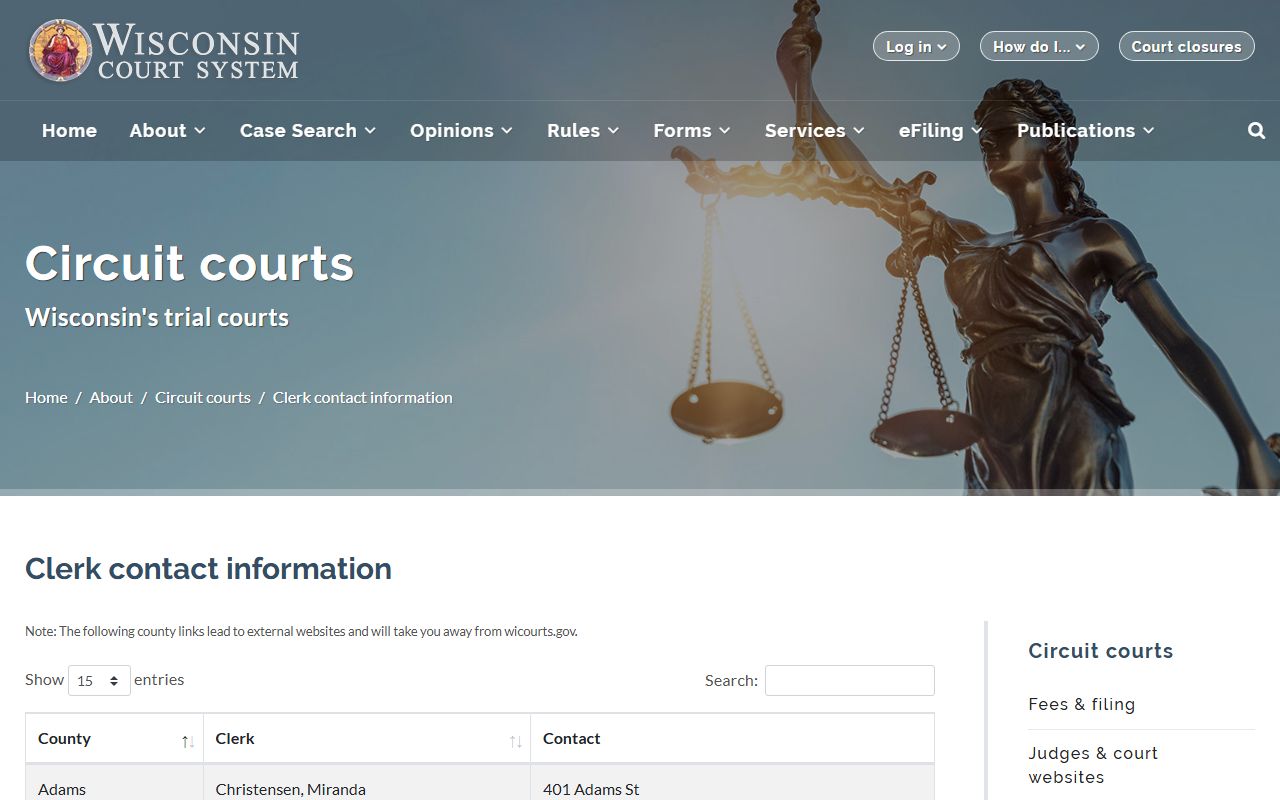
This county clerk image fits the office step because it points directly to the office that manages the local record path.
Search Iowa County Bankruptcy Records
WCCA is the official Wisconsin circuit court public portal. It is free, it updates hourly unless maintenance or technical problems get in the way, and it gives case summaries for public records that are entered into the circuit court case management system. For Iowa County, that means you can search by party name, business name, case number, or other case identifiers and see what the docket looks like before you ask for a copy. It is the fastest way to test whether the record you want is actually in the county system.
WCCA also has limits that matter. The site does not display confidential records, and some records are not open to public inspection. It also notes that the official judgment and lien docket is maintained in the clerk of circuit court office for each county. That is important for Iowa County because a bankruptcy search often runs into a judgment or lien trail. If the same name appears in more than one form, WCCA may show separate alias entries. Those entries do not always mean different cases, so the case number matters more than the name alone.
The Iowa County law library page is useful because it gives the local court contacts without adding noise. It lists the clerk of court, Register in Probate, victim and witness assistance, Free Legal Answers Wisconsin, and the State Bar lawyer referral line. For a bankruptcy search, that helps when the county side of the record needs a follow-up question or when the file spills into probate or victim notification work. It keeps the search anchored in the county office instead of a generic statewide listing.
Use WCCA here: Wisconsin Circuit Court Access.
See the Iowa County law library page here: Iowa County legal resources.
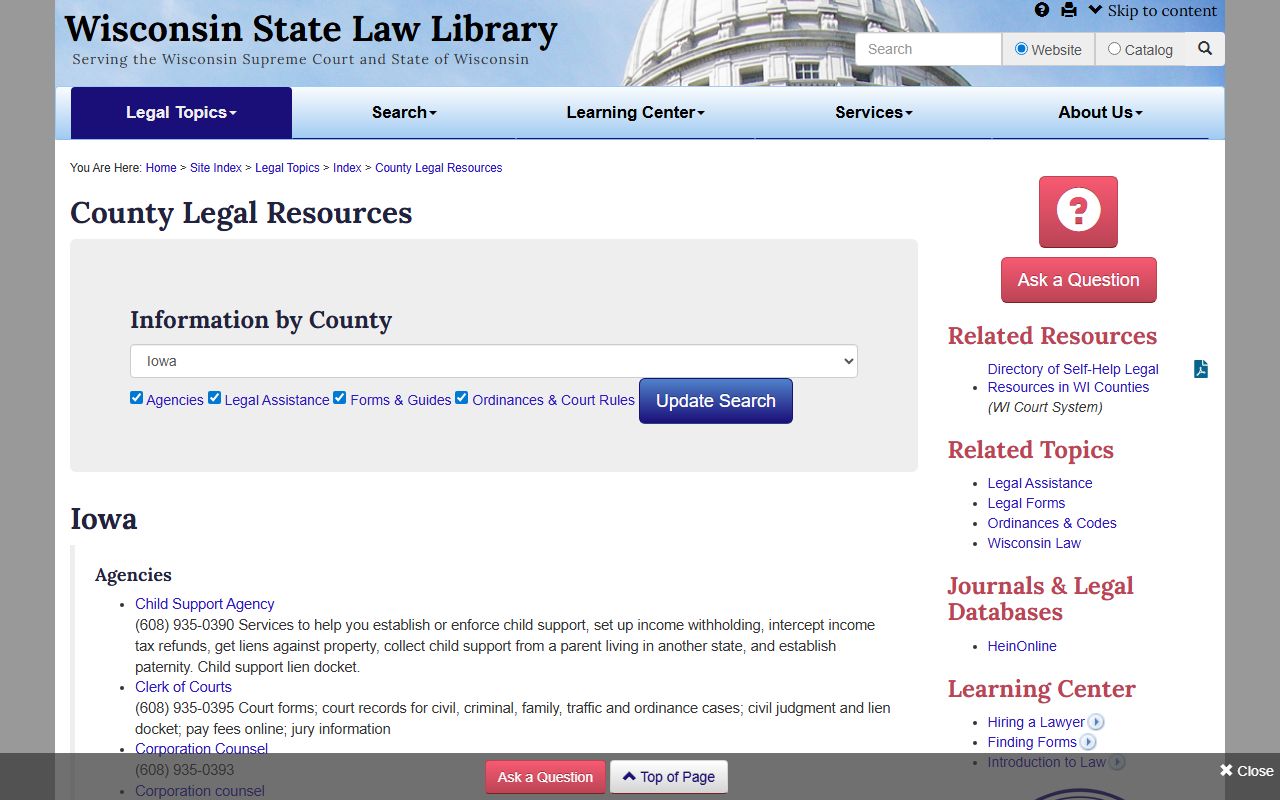
The law library image fits the search step because it points to the county resource page that gathers the local contacts in one place.
Keep these details ready before you search:
- Full name of the person or business
- Case number if you already have it
- Approximate filing year
- Whether you need a docket or a copy
Iowa County Bankruptcy Records at the Court
Iowa County bankruptcy cases belong to the Western District of Wisconsin. The court's Madison clerk's office is at 120 North Henry Street, Room 340, Madison, WI 53703. Office hours are Monday through Friday from 8:00 AM to 4:30 PM. The court's voice case information line, McVCIS, is free and available 24 hours a day at (866) 222-8029. It can give the case number, debtor name, filing date, attorney, judge, trustee, status, 341 meeting date, claim deadline, discharge date, closing date, and case disposition. For a quick check, that is often enough to confirm you have the right file.
The court also explains how records and copies work. PACER has bankruptcy information from April 1, 1991 forward. You can register for PACER to view the official bankruptcy docket online, or you can call the clerk's office or mail a request for copies. When the clerk does the work before anything is processed, payment must be made first, and the court requires a cashier's check or money order payable to the United States Bankruptcy Court. Debtors can also get a copy of a discharge free if the discharge occurred after February 2002.
The Western District FAQ page is especially useful because it lays out the basic court rules in plain terms. Bankruptcy is a legal procedure under Title 11 of the United States Code. The clerk's office keeps the records filed or deposited with the court. If you are filing on your own, you are pro se. The § 341 meeting of creditors is generally held about 40 days after the petition is filed. Those details matter when a county search turns into a federal bankruptcy question and you need the federal office instead of the county clerk.
Use the Western District court here: Western District bankruptcy FAQs.
Use PACER here: PACER.
McVCIS is the fastest free path when you only need the federal case basics for an Iowa County bankruptcy search.
Iowa County Bankruptcy Records at PACER
PACER is the formal federal access system for bankruptcy dockets and documents. It is the right tool when the Iowa County search points to a federal bankruptcy case and you need more than a county summary. The docket can show the filing history, the parties, and the status of the case. For older cases, PACER also gives you a path to archived information. That matters because the Western District notes that documents may be restricted for some older closed cases, even when the docket itself is still viewable.
The court information page and the FAQ page work well together. One gives the Madison address and hours, and the other explains how discharge copies and document requests work. If you only need a discharge copy and the discharge was after February 2002, the court says the debtor can get it free by phone, by mail, or in person. If you need copies from the clerk, prepayment by cashier's check or money order is required before work starts. That keeps the process formal but predictable.
The Wisconsin State Law Library bankruptcy page is the best support page when you want the federal rules, bankruptcy forms, or a plain-language explanation of the process. It links to Bankruptcy Basics, the U.S. Code, the Federal Rules of Bankruptcy Procedure, and the Bankruptcy Assistance Program at (608) 204-9642. It also points to the Dane County satisfaction-of-judgment form, which is useful after discharge when a county judgment needs cleanup. For Iowa County, that kind of support keeps the search from ending too early.
See the state bankruptcy support page here: Wisconsin bankruptcy support resources.
The Madison courthouse at 120 North Henry Street, Room 340, is the place to contact when a paper copy or in-person review is needed.
Wisconsin Bankruptcy Records Laws
Bankruptcy files often sit next to state law records, and that is especially true in a county search. Chapter 128 covers creditors' actions and debt amortization. Chapter 815 covers judgment enforcement. Chapter 816 covers supplementary proceedings. Chapter 812 covers garnishment. Chapter 242 covers voidable transactions. Those chapters matter when a bankruptcy filing changes what a creditor can do, what a county clerk records, or what gets cleaned up after discharge.
The Iowa County law library page gives the local support contacts that matter once the record trail moves beyond a single docket. It lists the clerk of court, Register in Probate, victim and witness assistance, the State Bar referral line, and Free Legal Answers Wisconsin. That means the county side of the search stays practical. If the record is not in the federal bankruptcy court, the county office and the law library contacts can still tell you where the next paper lives.
WCCA also helps explain the rules of public access. It uploads court information hourly, pauses for maintenance from 3:00 a.m. to 4:00 a.m., and leaves confidential records off the public site. That means the public portal is useful, but not complete. If a case no longer appears online, the clerk office and the county judgment docket may still have the full file. For Iowa County, that is the difference between a partial result and a usable record search.
Note: Iowa County uses the clerk office for the official judgment and lien docket, even when WCCA shows the public case summary.
Iowa County Bankruptcy Records Images
See the Iowa County law library page again here: Iowa County legal resources. That link matches the first county image and gives the county contact map that supports the search.
The first image is the best county lead because it points to the local resource page that gathers the clerk and related office contacts.
See the Iowa County clerk directory again here: Wisconsin clerk contact directory. That link matches the second county image and confirms the courthouse contact details.
The second image works well because it reinforces the courthouse address and the clerk office that handles the local record trail.