
Search Wisconsin Bankruptcy Records
Wisconsin Bankruptcy Records are federal court records, but a good search usually pulls in more than one source. You may need the Eastern or Western District bankruptcy court, PACER, the free McVCIS phone system, county clerk contacts for judgment follow-up, and Wisconsin law-library guides that explain where each layer fits. The state is split between two federal bankruptcy districts, so the first step is matching the right county or city to the right district. Once that is clear, searching, viewing, and requesting Wisconsin Bankruptcy Records becomes much more direct.
Wisconsin Bankruptcy Records Overview
Wisconsin Bankruptcy Records Basics
The Western District FAQ explains bankruptcy as a legal process for dealing with debt problems under chapters of Title 11. That federal framing matters because Wisconsin Bankruptcy Records are not held by a state vital-records office and they are not housed in city hall. The actual case file belongs to a federal bankruptcy clerk. A county office may still matter when a bankruptcy discharge has to be matched to a state judgment record, but the bankruptcy petition, schedules, docket, trustee assignment, discharge, and case status live in the federal system first.
Wisconsin is split between the Eastern District and the Western District. The eastern side routes bankruptcy matters through Milwaukee, with hearings also held in Green Bay and Oshkosh, while the western side routes matters through Madison and Eau Claire. County pages on this site narrow that down further. They show which district serves each county, which clerk office handles related county records, and which local tools help when a search starts with a city name instead of a case number.
The official court and law-library sources also make a second point clear. Wisconsin Bankruptcy Records are easier to find when you keep federal files, county records, and state summary tools in separate lanes. That is why this site keeps district guidance, clerk contacts, and county pages tied together instead of treating every court source as if it does the same job.
Wisconsin Bankruptcy Records Districts
The Eastern District of Wisconsin serves Milwaukee and the other eastern counties listed on the court’s site. The Milwaukee clerk office is at 517 East Wisconsin Avenue, Room 126, Milwaukee, Wisconsin 53202, and the court lists public hours from 8:30 a.m. to 4:30 p.m. Hearings can also be held in Green Bay and Oshkosh, but those locations do not accept filings. That distinction matters when a person sees a hearing city on the docket and assumes the full file is stored there. For Wisconsin Bankruptcy Records on the eastern side, the clerk’s office remains the anchor.
The Western District case-information page fills the same role for the western side. It points users to online access, voice access, archived case retrieval, and noticing options. The state research also shows western district operations in Madison and Eau Claire. Counties such as Dane, La Crosse, Marathon, Portage, and Eau Claire run through that side. If you know the county, you can usually match it to the right district in minutes. If you do not know the county, the city pages in this project help narrow it down.
The district split is the most important first filter in any statewide search. Use the district first. Then use the county page. Last, check any related state or county record source that may connect to the bankruptcy matter after filing or discharge.
The district overview shown on the Eastern District site is useful because it grounds Wisconsin Bankruptcy Records in the actual federal court system instead of leaving the search at a vague state level.
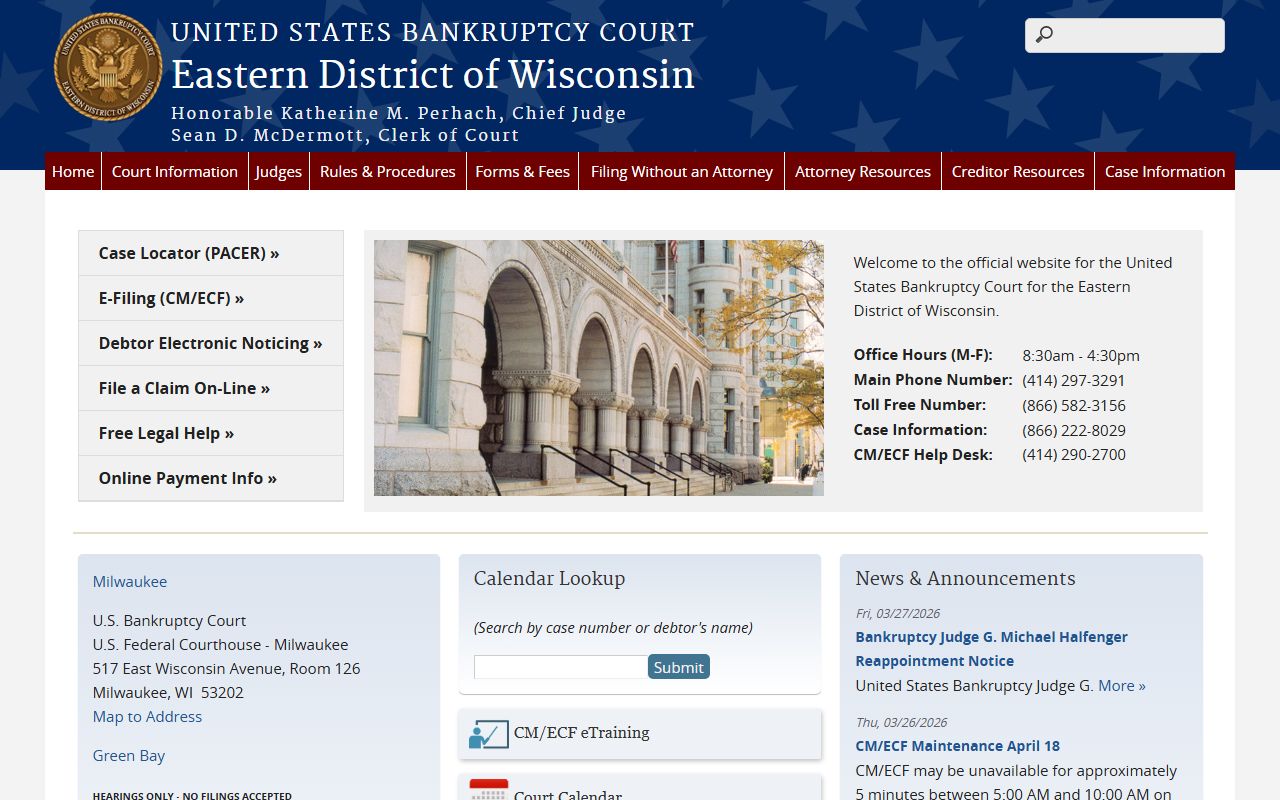
That image supports the east-side court path for Wisconsin Bankruptcy Records and helps explain why county and city pages still need a federal destination.
The Western District source page at the FAQ section is just as important because it brings the western counties into the same record framework.
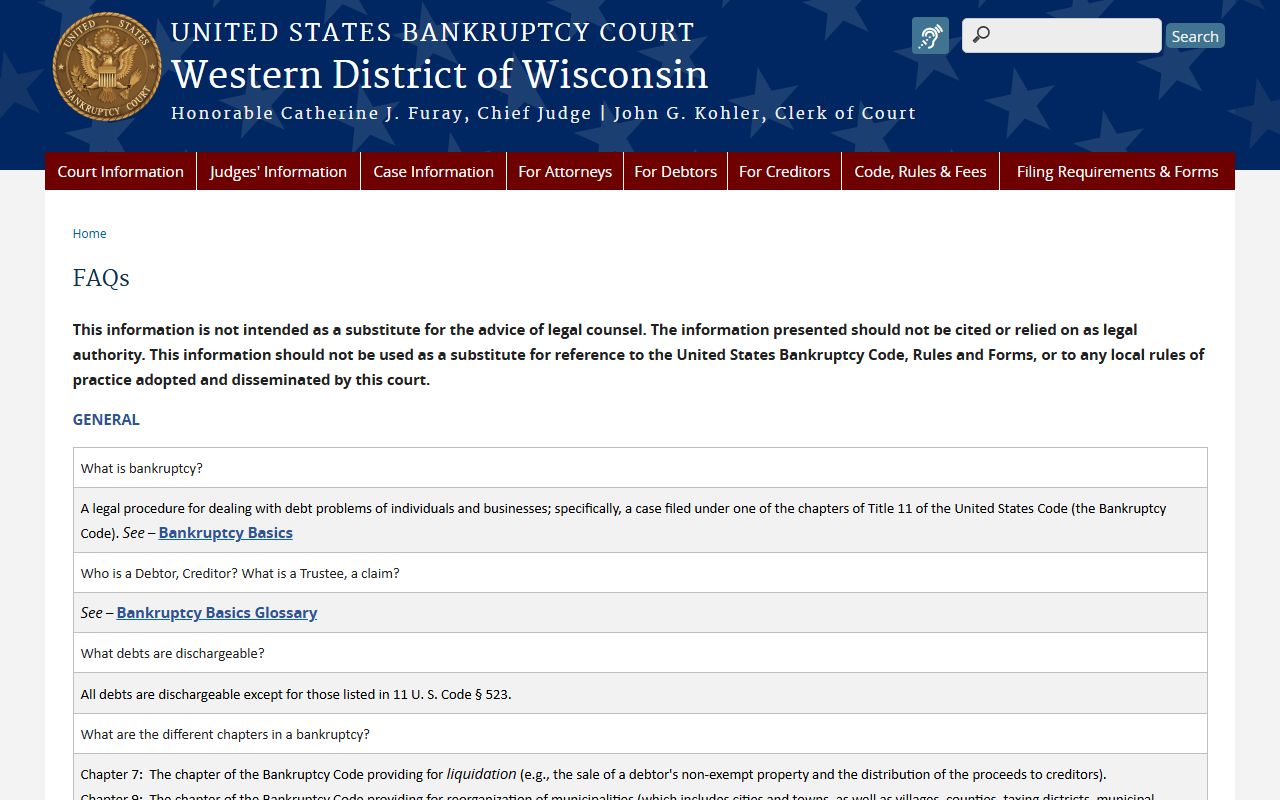
That image keeps the western half of Wisconsin Bankruptcy Records tied to the federal FAQ that explains case access and district coverage.
Search Wisconsin Bankruptcy Records Online
The fastest official tool is usually PACER. The Western District case-information page and the federal judiciary materials summarized in the research explain that PACER lets registered users view dockets, case status, claims registers, party lists, and many filed documents. It is the main online path for Wisconsin Bankruptcy Records when the goal is the federal docket itself. The courts also note an important limit for some older cases. In certain bankruptcy matters filed before December 1, 2003 and closed for more than a year, public PACER access to the documents may be restricted even though the docket report remains visible.
That is where the free phone system still helps. The Western District FAQ says McVCIS gives basic case information around the clock, including the case number, debtor name, filing date, assigned judge and trustee, case status, meeting date, claim deadline, discharge date, and closing date. For many Wisconsin Bankruptcy Records searches, that is enough to confirm that the case exists before you place a copy request or log in to PACER. The Eastern District also lists McVCIS as part of its public access tools, which means the voice route remains useful on both sides of the state.
State tools matter too, but in a different way. The Wisconsin law-library public-records materials explain that WCCA is the place for state circuit court summaries, not federal bankruptcy filings. A bankruptcy search can still lead you to WCCA when a county judgment, lien, or related state court event needs to be checked. That is why county pages here keep both systems in view. They are separate systems, but people often need both.
The case-access options collected on the Western District case-information page are one of the clearest sources for search methods.
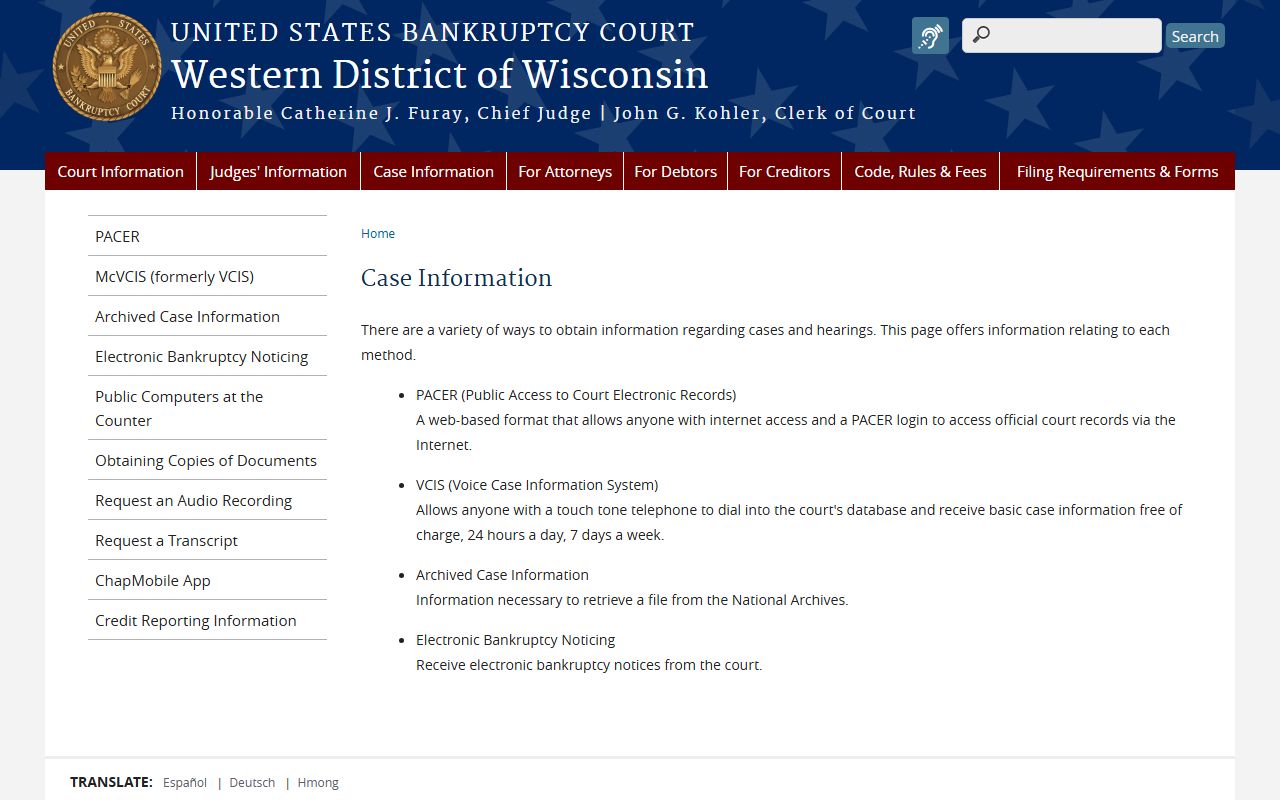
That image highlights the official search choices for Wisconsin Bankruptcy Records, including PACER, VCIS, and archived case retrieval.
The electronic filing and case-access material on the Eastern District CM/ECF page adds the eastern-side context for online case work.
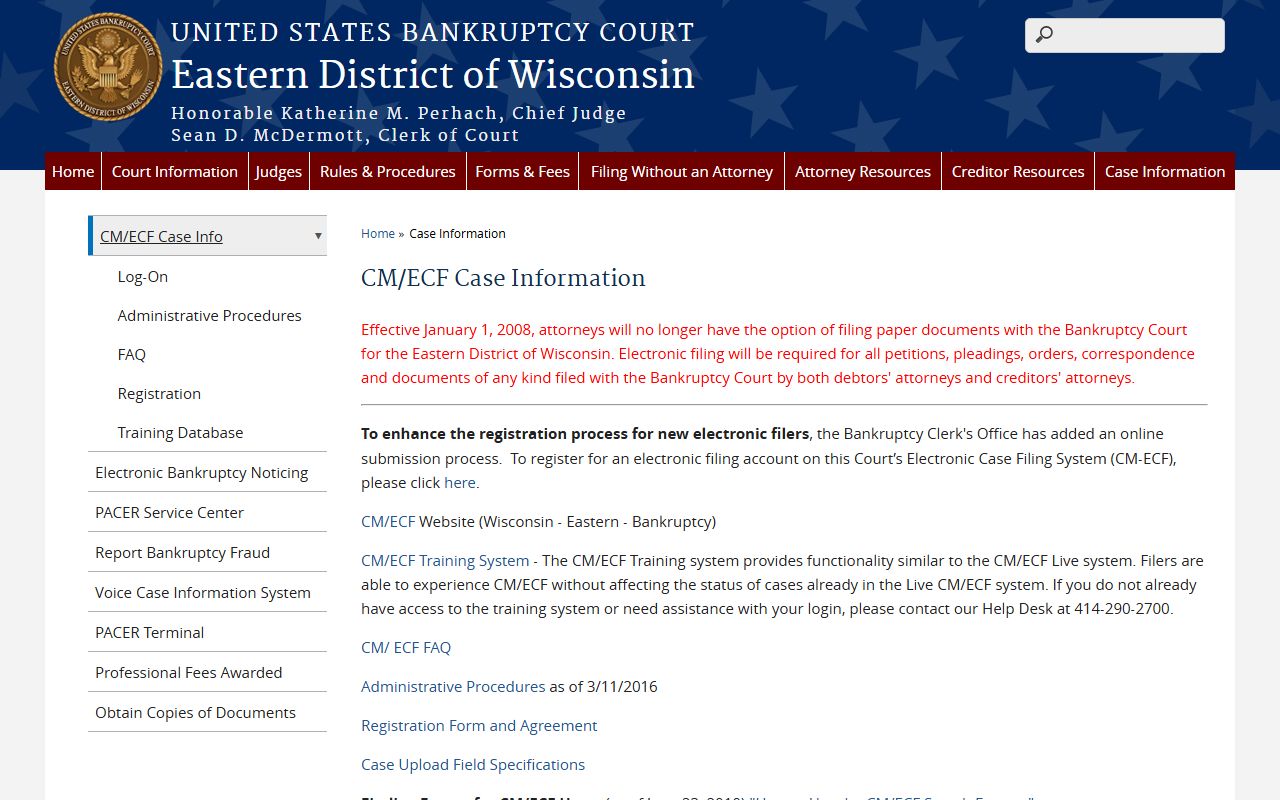
That image reinforces that Wisconsin Bankruptcy Records move through federal electronic systems even when the search begins with a local name.
Get Wisconsin Bankruptcy Records Copies
When the docket is not enough, the next question is how to get the paper. The state-level western district research says you can call or mail the clerk’s office for copies, visit the Madison or Eau Claire courthouses in person, or create a PACER account and download documents online. The same research notes that debtors can obtain a discharge copy for free if the discharge occurred after February 2002. That is a useful rule because many people searching Wisconsin Bankruptcy Records are not chasing the whole case. They just need proof of discharge, a filing date, or a closing date.
Older files can take a different route. The research explains that archived cases sent to the National Archives require retrieval details such as the debtor name, case number, closing date, accession number, location number, and box number. The bankruptcy court can help supply that data before the records request moves to the National Archives system. That extra step matters because older Wisconsin Bankruptcy Records do not always stay on the same live court path as newer electronic files.
The national archives contact guidance at the National Archives Chicago contact page is useful when Wisconsin Bankruptcy Records have moved beyond the active court file.
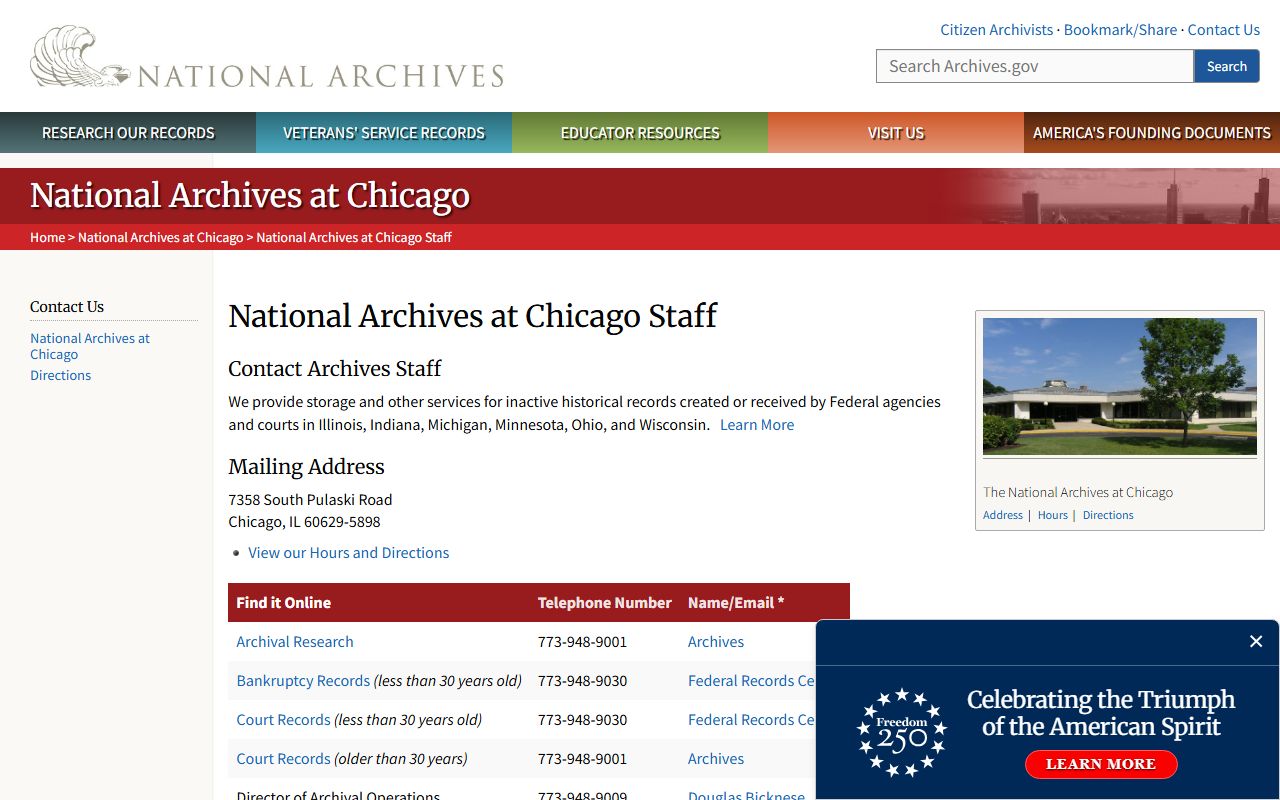
That image supports the archive-retrieval side of Wisconsin Bankruptcy Records and reminds users that older files may no longer be at the front counter.
The Milwaukee federal court archive aid at the National Archives Milwaukee court finding aid adds another official route for older eastern-side files.
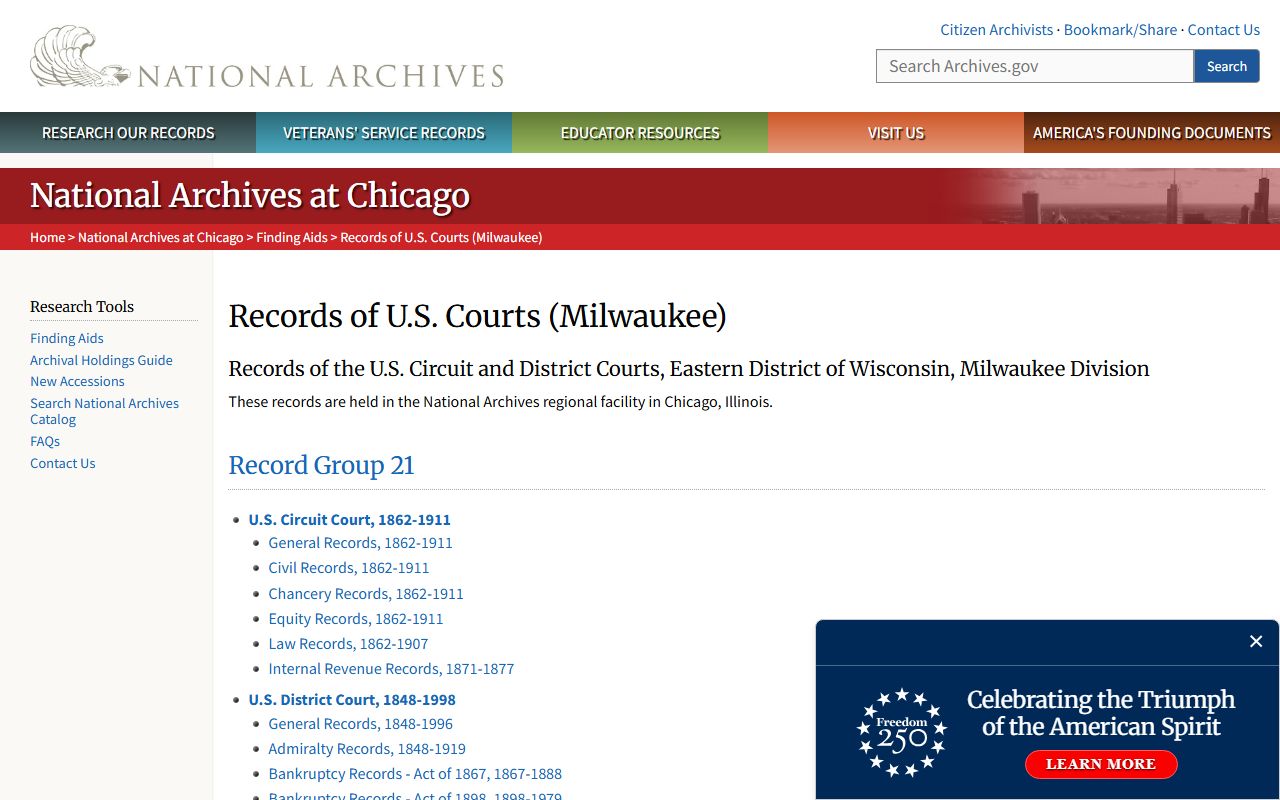
That image ties Wisconsin Bankruptcy Records to a concrete archive finding aid rather than leaving older cases to guesswork.
The territorial-court archive page at the Wisconsin territorial courts finding aid is not a modern bankruptcy source, but it gives historical court context for the oldest Wisconsin records landscape.
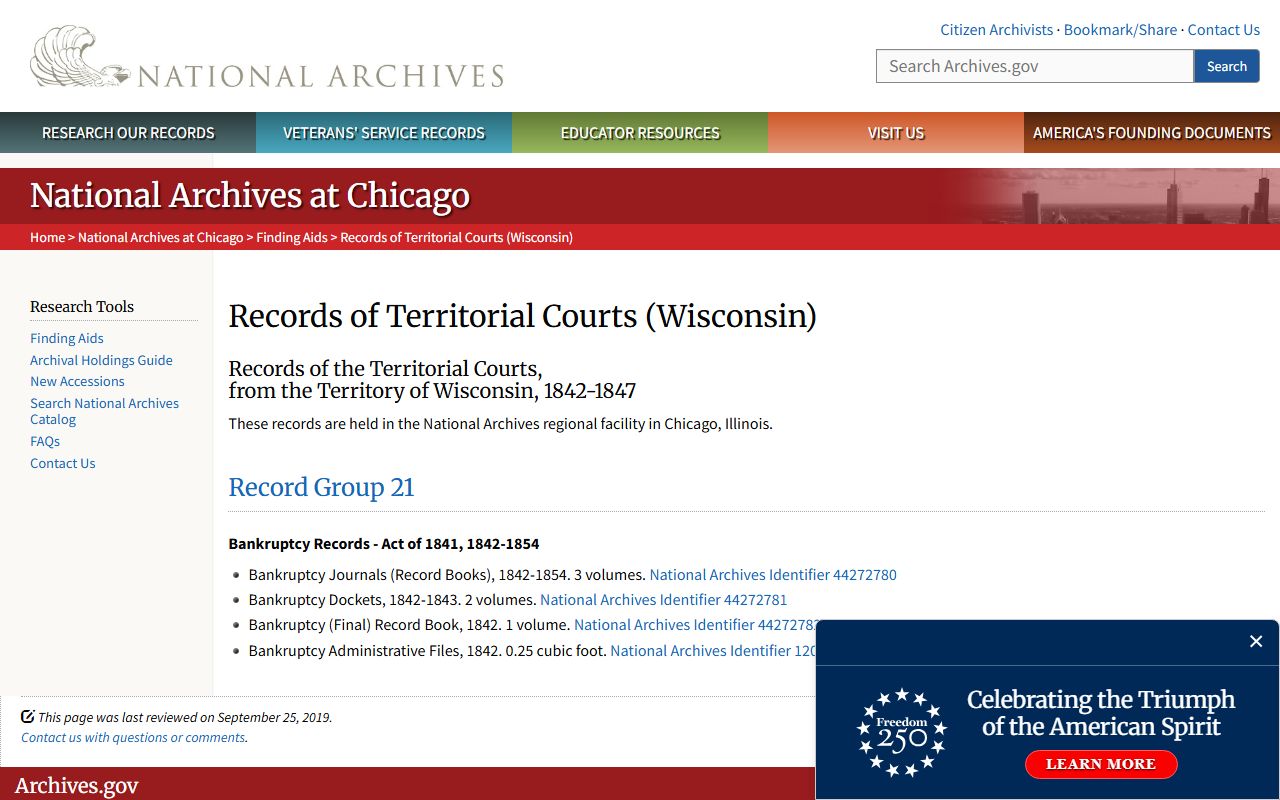
That image adds historical depth without changing the basic rule that modern Wisconsin Bankruptcy Records remain a federal court matter first.
Wisconsin Bankruptcy Records Help
The Wisconsin State Law Library bankruptcy page is one of the best statewide support pages in the research set. It pulls together bankruptcy basics, district links, forms, and other starting points without pretending to be the court file itself. That makes it useful for beginners and for follow-up searches. If you are not sure whether you need the Eastern District, the Western District, PACER, chapter information, or local follow-up forms, the law-library page gives a clean official starting point.
The law-library form and law guides add more context. The forms page helps users locate Wisconsin court forms. The general Wisconsin law guide helps users move through statutes and legal research tools. Those sources do not replace the bankruptcy clerk, but they help explain the record trail. Wisconsin Bankruptcy Records searches often stall because a person knows the debt issue but not the name of the form, the district, or the follow-up step. The law-library pages reduce that friction.
The support material gathered at the Wisconsin State Law Library bankruptcy topic page is a strong statewide reference point.
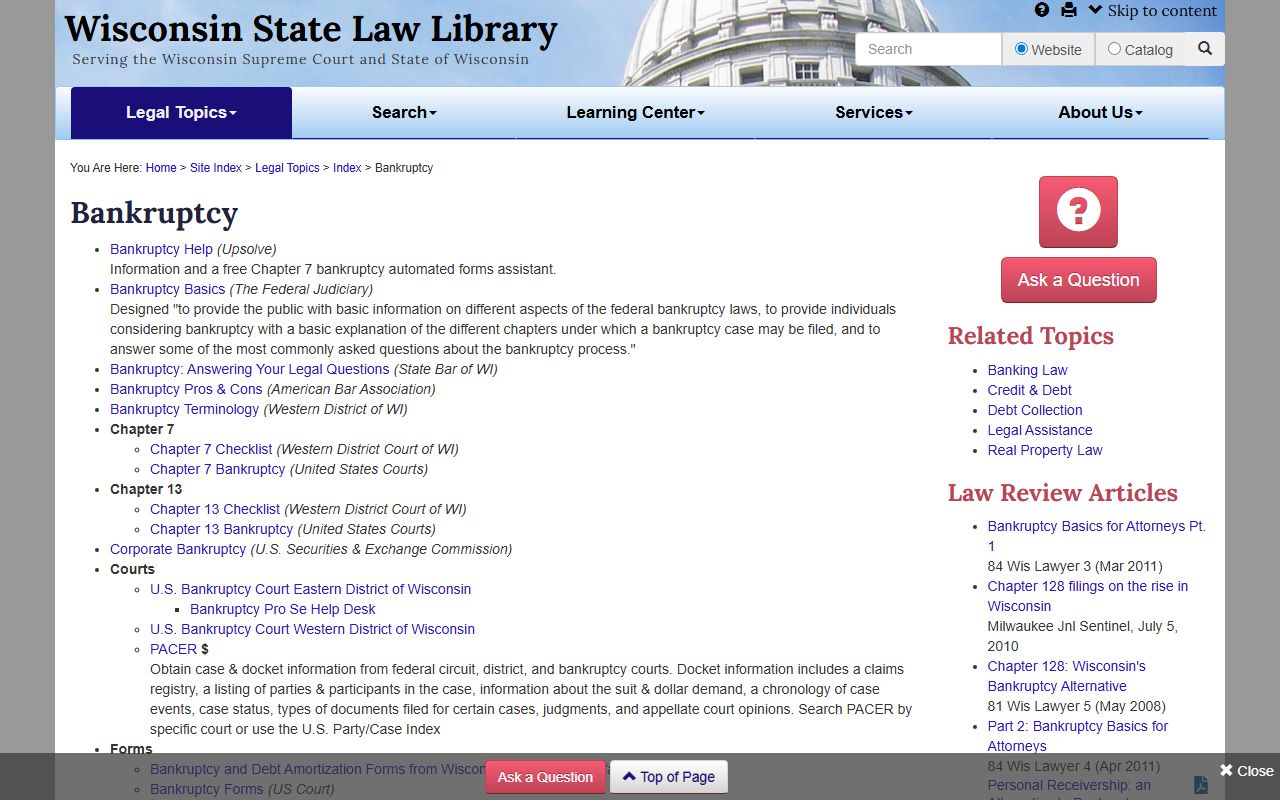
That image keeps Wisconsin Bankruptcy Records tied to the official state law-library research layer that supports both districts.
The broader legal research guidance at the Wisconsin law topic page helps when a search turns from a docket question into a statute or procedure question.
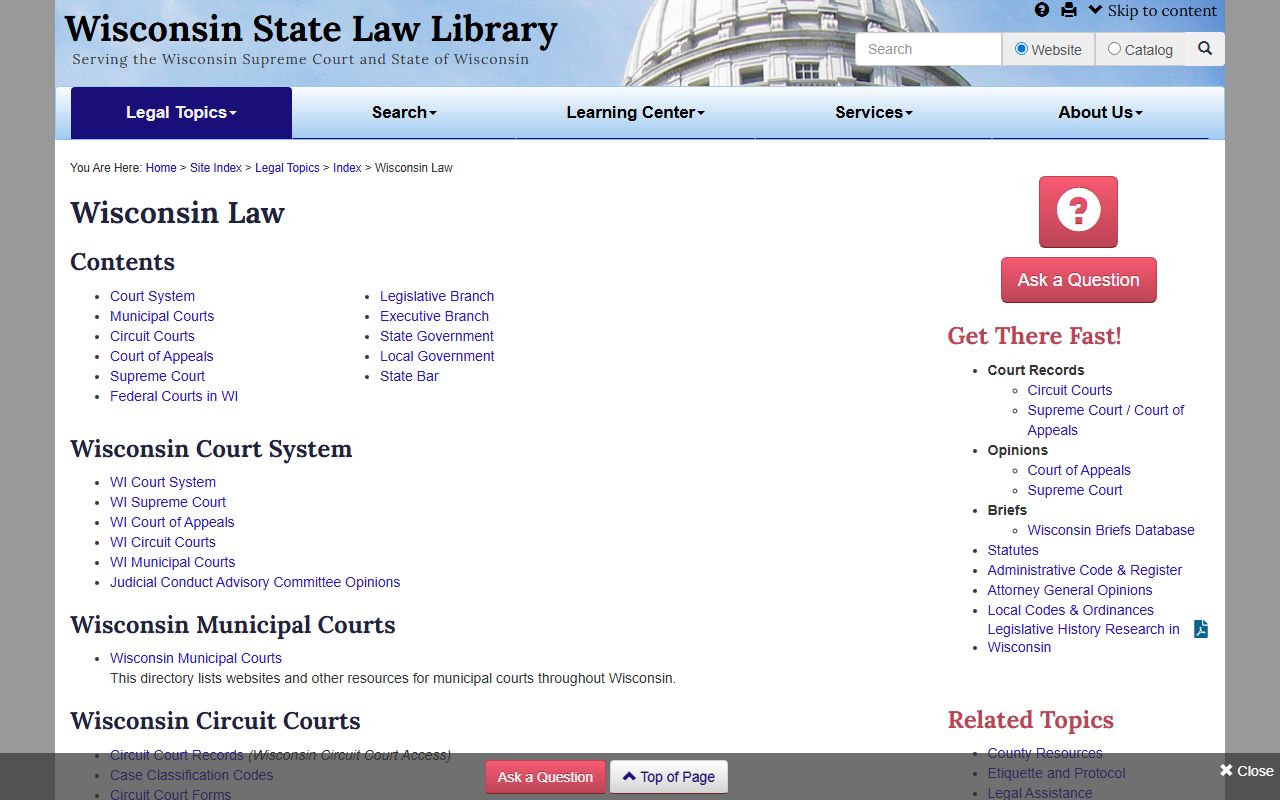
That image supports the research side of Wisconsin Bankruptcy Records when users need to understand the law behind the record request.
The forms collection at the Wisconsin forms page is also useful when a bankruptcy issue spills into a county filing or follow-up process.
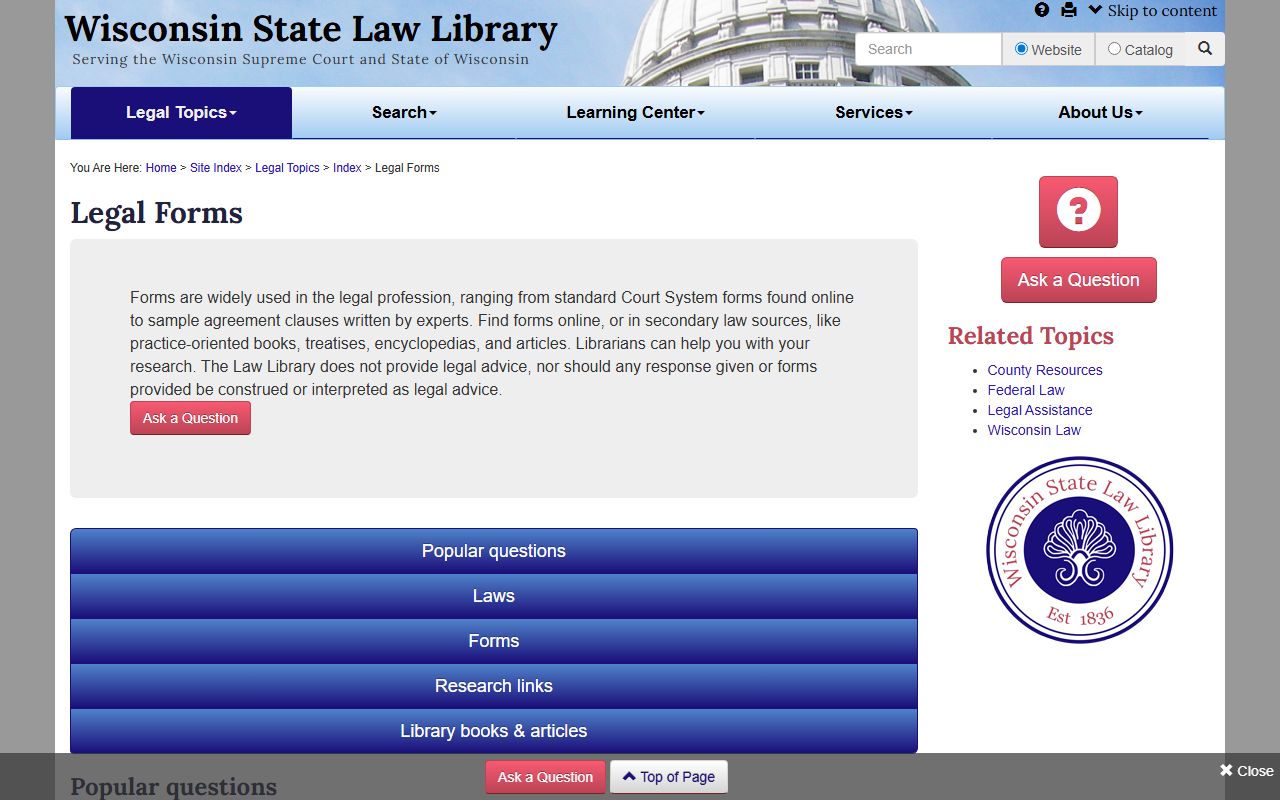
That image shows the form-search side of Wisconsin Bankruptcy Records and supports later procedural steps after the case is found.
Wisconsin Bankruptcy Records And County Courts
County clerks do not keep the federal bankruptcy case file, but they still matter. The Western District FAQ explains that post-discharge satisfaction of judgments are handled in the state or county court where the judgment was recorded. That means Wisconsin Bankruptcy Records research can shift from the federal docket to a county judgment and lien trail after discharge. County pages in this project keep that local side visible, especially in places where a county clerk offers forms or procedures tied to satisfaction after bankruptcy.
The law and statute sources in the research support that split. Wisconsin statutes on creditors’ actions, attachment, execution, and fraudulent transfers help explain why bankruptcy searches sometimes lead to state-court paperwork or judgment cleanup rather than ending at the federal docket. Those sources are not here as a stand-alone law lecture. They matter because a person searching Wisconsin Bankruptcy Records may need the discharge paper, a county judgment reference, and the right form for local follow-up.
The statute page at Wisconsin Statutes Chapter 128 supports the state-side debt and creditors context that can appear next to Wisconsin Bankruptcy Records.
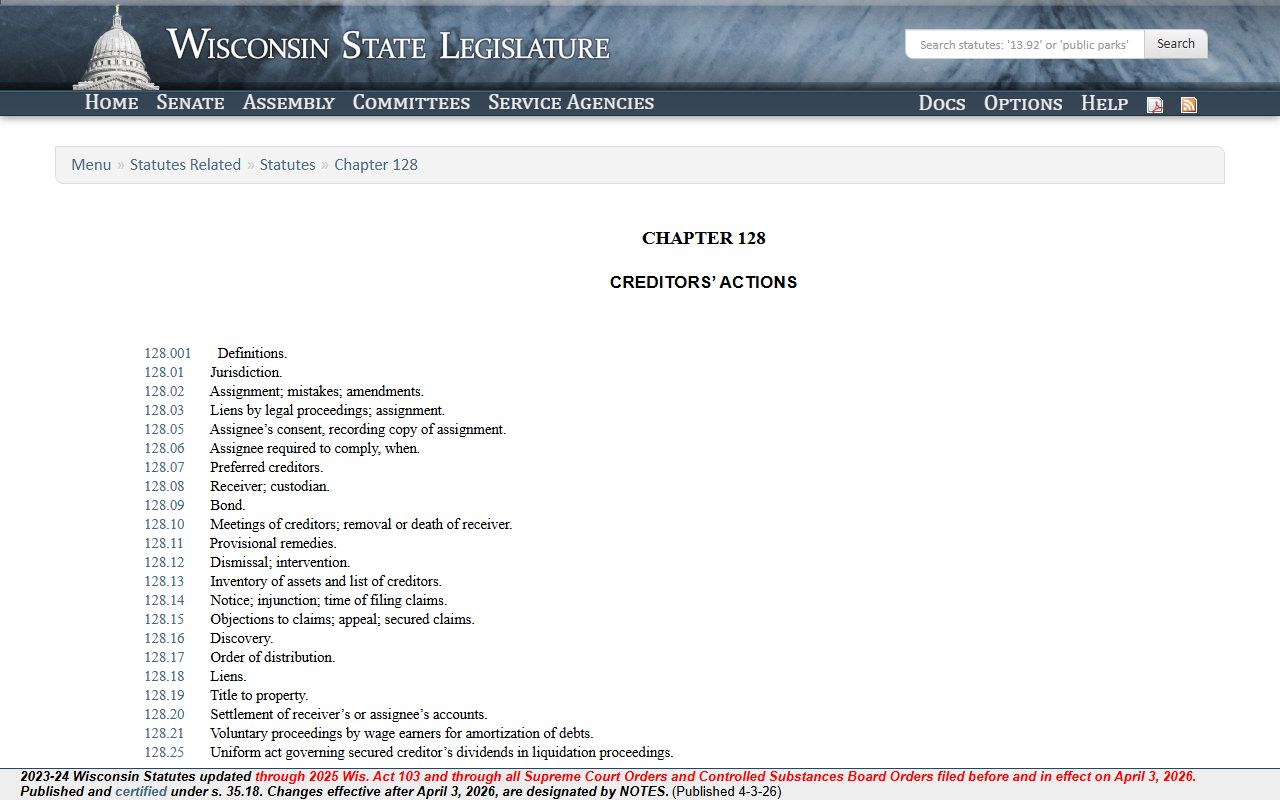
That image helps connect Wisconsin Bankruptcy Records to local debt-adjustment and post-judgment questions that can appear in county court.
The execution statute at Wisconsin Statutes Chapter 815 adds another official source for state-side judgment enforcement context.
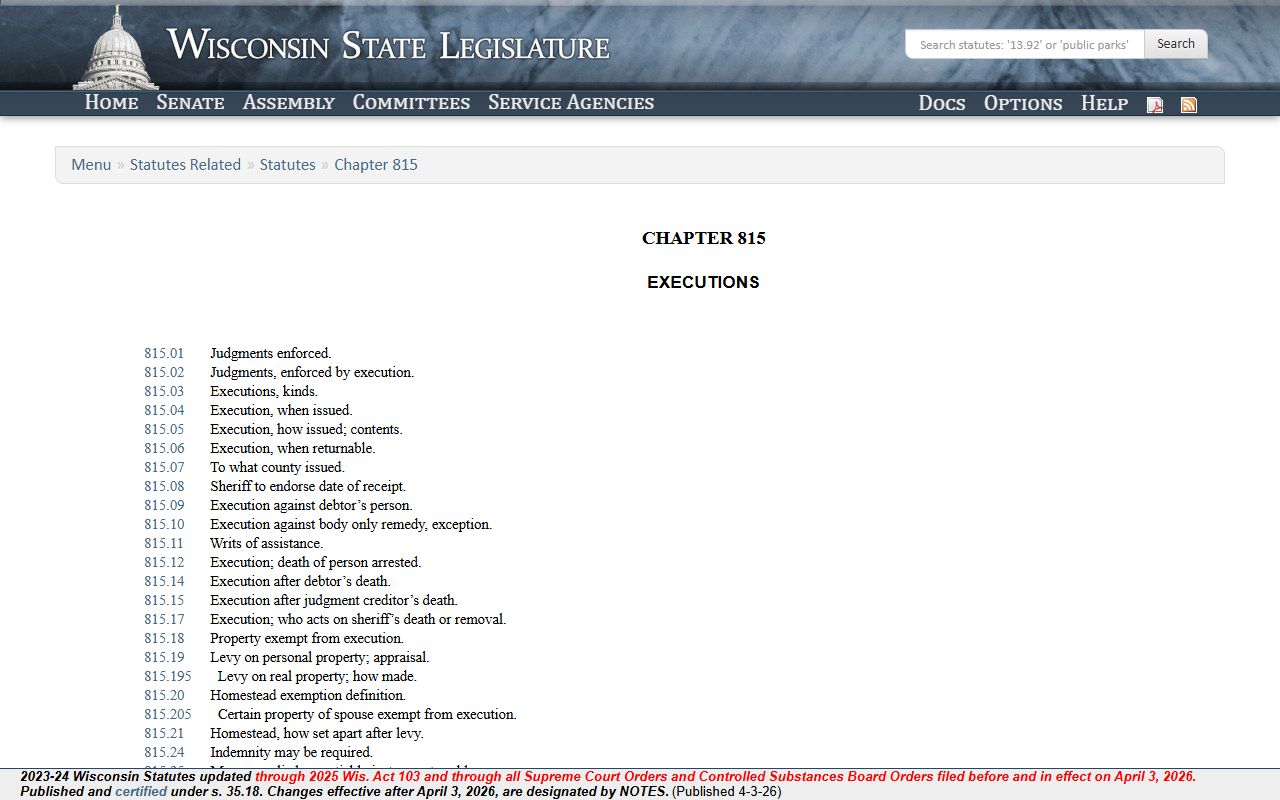
That image supports the county follow-up side of Wisconsin Bankruptcy Records when a federal discharge affects a state judgment record.
The supplementary remedies page at Wisconsin Statutes Chapter 816 continues that same judgment-collection context.
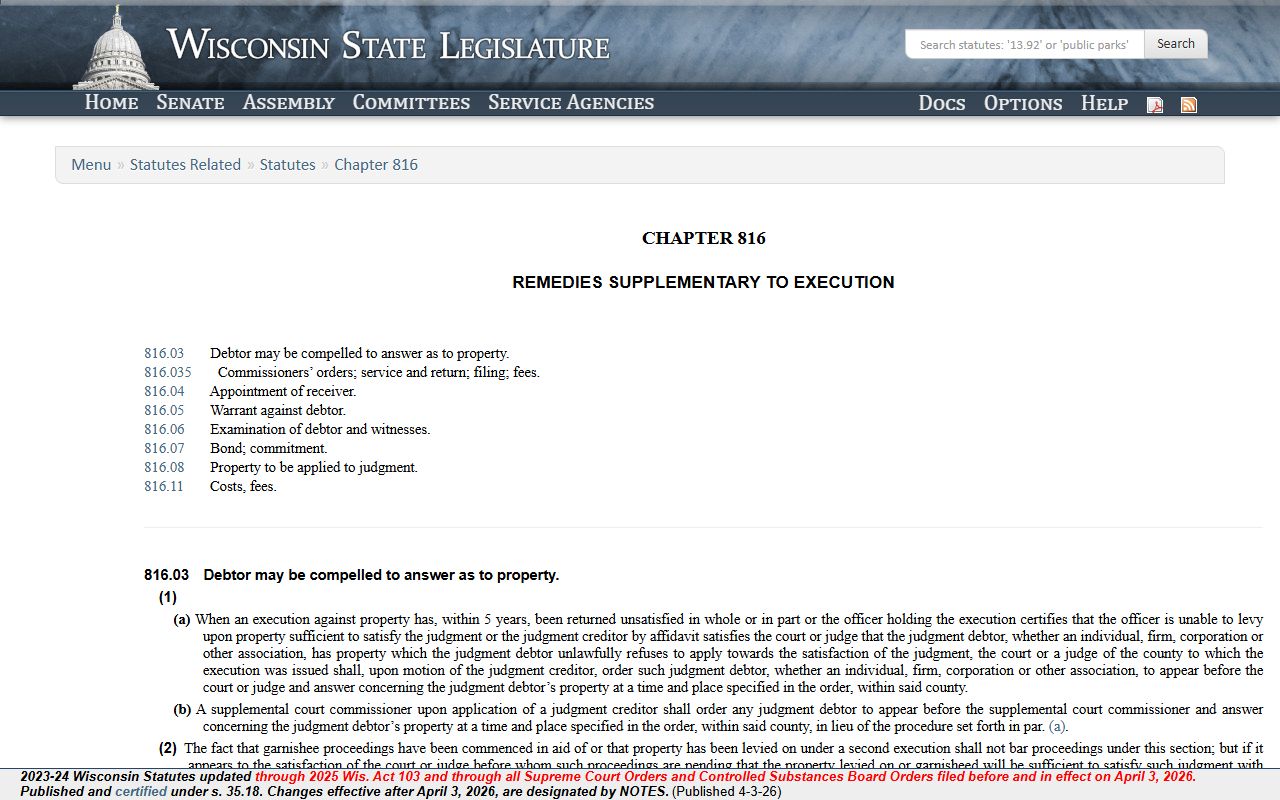
That image gives more statutory context for the state-court side of Wisconsin Bankruptcy Records without confusing it with the federal case file.
The fraudulent-transfer statute page at Wisconsin Statutes Chapter 242 is another source that can matter in related debt litigation.
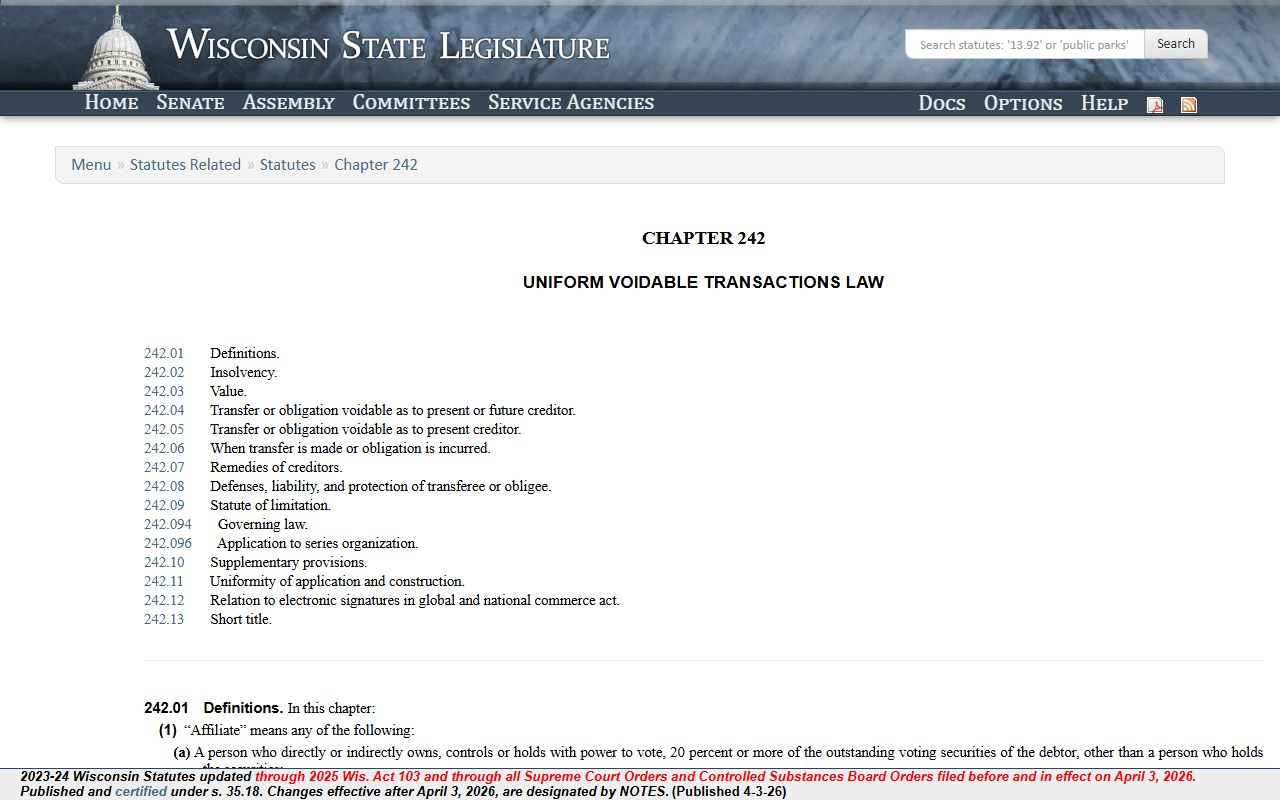
That image helps round out the official state-law context that may appear around Wisconsin Bankruptcy Records searches.
The attachment statute page at Wisconsin Statutes Chapter 812 adds one more official debt-collection reference from the state research set.
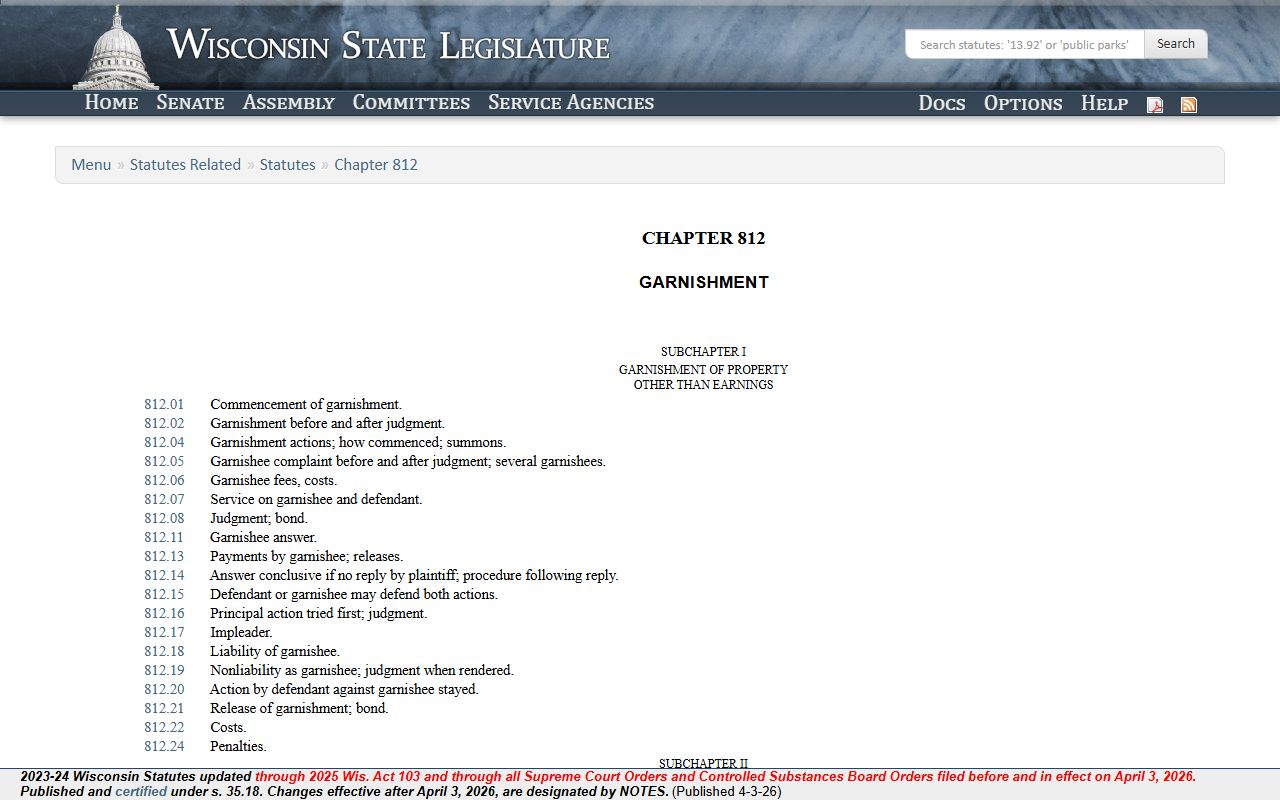
That image closes out the state-law portion of Wisconsin Bankruptcy Records by showing how bankruptcy questions can intersect with local collection procedure.
Browse Wisconsin Bankruptcy Records By County
County pages connect the federal bankruptcy district to county clerk and court-record context. Use them when your search starts with a county name, a courthouse, a lien question, or a satisfaction issue.
Wisconsin Bankruptcy Records In Major Cities
City pages help when the search starts with Milwaukee, Madison, Green Bay, or another city and you need to identify the right county and federal court path before you order records.