
Find Clark County Bankruptcy Records
Clark County bankruptcy records start with the local clerk office, then move to WCCA and PACER when you need the federal file. That order matters because the county court and the bankruptcy court do different jobs. The clerk can help you locate a case file, confirm a docket hit, or prepare a copy request. The federal court holds the bankruptcy case itself. If you know where the record lives, you can search faster and avoid the waste that comes from asking the wrong office first.
Clark County Bankruptcy Records Overview
Clark County Bankruptcy Records Office
The Clark County Clerk of Court is at 517 Court Street in Neillsville, Wisconsin 54456, and the phone number is 715-743-5181. The Wisconsin Court System directory confirms the same office and adds the mailing format 54456-1971. That is the place to verify when you want a county record, a copy request, or a local office detail tied to Clark County bankruptcy records. The clerk is the records custodian, so the office can help you find the file but cannot act as your legal adviser.
The Wisconsin State Law Library's Clark County page lists court forms, court records for civil, criminal, family, traffic, and ordinance cases, the civil judgment and lien docket, online fee payment, and jury information. It also lists the Register in Probate, the Register of Deeds, the Child Support Agency, and the victim/witness office. Those local contacts are practical when a bankruptcy search touches another court record or a county form that sits beside the federal case. They help you keep the search local and clear.
The county legal resources page below is the first place to verify the local office map: Clark County legal resources.
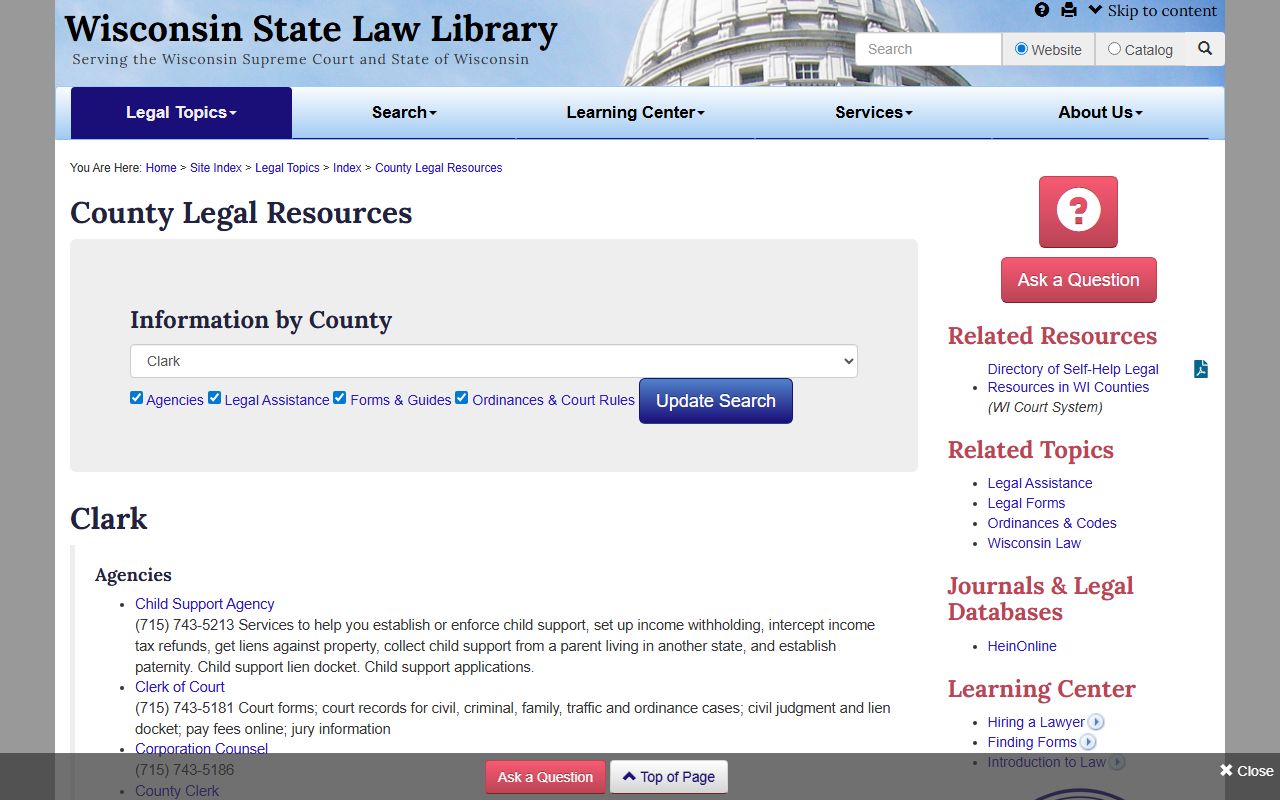
That image points to the county law library page that gathers the Clark County court contacts in one place for a faster bankruptcy records search.
Clark County also lists small claims procedures, traffic court information, language assistance, and court rules and ordinances. Those items do not replace a bankruptcy file, but they tell you how the local court system is organized and where the right office sits when a county record needs to be checked.
How to Find Clark County Bankruptcy Records
WCCA is the most direct public search tool for Clark County bankruptcy records when you need a docket summary. It lets you search by party name, business name, or case number, and it provides the sort of case summary that shows filings, rulings, and status. It does not show actual documents. That is an important limit. If you need the paper itself, the clerk office remains the place to request a copy.
WCCA says Clark County coverage generally dates from the mid-1990s to the present, and it also notes that juvenile, sealed, and confidential records are not available online. Facsimile filing is subject to local court rules in Clark County, which is a useful detail if you are sending something to the clerk and need to know how the court handles it. For a person looking for a bankruptcy trail, WCCA works best as a map, not as the end result.
Copies of court documents cost $1.25 per page and certified copies are $5 per document. That fee structure appears in the WCCA information for Clark County, which makes it easy to budget a search before you place the request. If you do not have the case number, use the name search first. Then narrow the result by year and party type. A short request usually gets a cleaner answer than a broad one.
To cross-check the clerk office, use the statewide directory at the Wisconsin Court System clerk contact page. It confirms Clark County at 517 Court St, Neillsville, WI 54456-1971, with the same phone number. That keeps your records request tied to a verified county office rather than a stale source.
Clark County Bankruptcy Records and PACER
Clark County bankruptcy cases are filed in the U.S. Bankruptcy Court for the Western District of Wisconsin. The district serves Clark County through Madison and Eau Claire, and the federal court reminds users that bankruptcy is governed by Title 11. The public access terminals at the clerk's office can help when you need to view a docket or document set without relying only on the online search. The court also warns users about scam calls that try to demand payment over the phone. That warning is important. Official payment requests do not come from random callers.
The court says the McVCIS line at 866-222-8029 gives free basic case information around the clock. It also says debtors may get free copies of discharge orders if the discharge occurred after February 2002. If you need a printed copy, the court says payment must be by cashier's check or money order only. That rule matters when you are mailing a request or preparing to visit in person. It keeps the request simple and avoids a rejected payment.
The Western District case-information and FAQ pages explain archived case retrieval and electronic access. They help when a file is older or when the docket is not enough to tell you where the paper went. PACER is still the main federal document path. It gives online access to bankruptcy records, but there are costs for downloads and docket reports. The service can also grant fee exemptions to qualifying users, and the PACER Service Center can be reached at 1-800-676-6856 if you need help with account or access questions.
The PACER source below is a good place to start when the county search leads into the federal file: PACER.
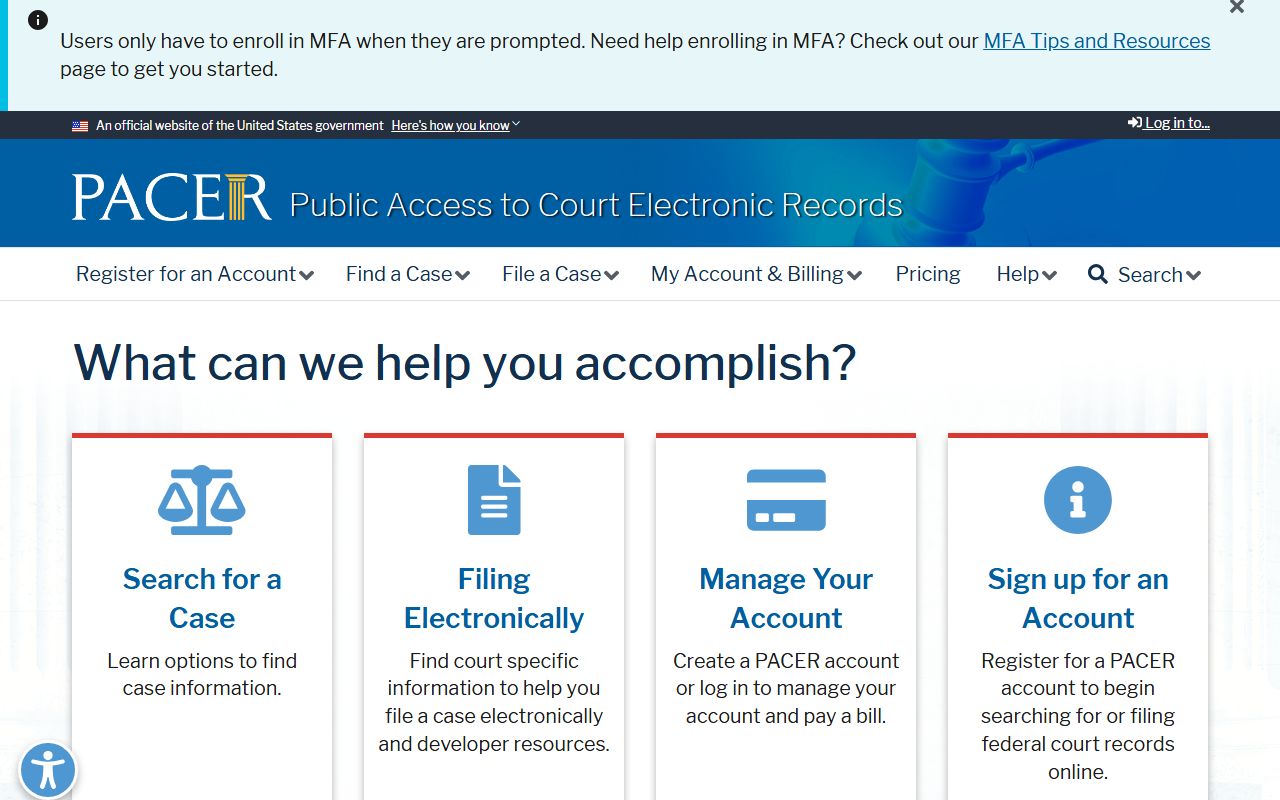
That image ties the federal access path to Clark County bankruptcy records and reminds you that the online docket is part of the larger bankruptcy record trail.
Clark County Bankruptcy Records Copies
The clerk office is where Clark County bankruptcy records copies begin. The office can confirm whether a file is in the courthouse, whether a facsimile filing follows local rules, and whether a plain or certified copy is the right request. The fee structure is straightforward. Plain copies are $1.25 per page and certified copies are $5 per document. If you are preparing a mailed request, keep the case number, party name, and requested document title close at hand so the office can match the paper fast.
The county resources page also gives you useful support offices. The Register in Probate, Register of Deeds, Child Support Agency, and victim/witness office can matter when a bankruptcy matter touches an estate file, a deed record, or another county case. The language assistance plan is also listed, which is helpful if a person needs translation or interpreter support while dealing with court records. Those local details help the search stay tied to the county office structure.
When a bankruptcy record leads into collection work, Wisconsin statutes can help frame the follow-up. Chapter 128 covers creditors' actions. Chapter 815 covers executions. Chapter 816 covers supplementary proceedings. Chapter 242 covers voidable transfers. Chapter 812 covers garnishment. Those links do not replace the record, but they explain why later docket entries can matter after a bankruptcy discharge.
For statewide forms and legal help, the Wisconsin State Law Library bankruptcy page is the cleanest hub. It links Bankruptcy Basics, the federal bankruptcy courts, PACER, county forms, the Bankruptcy Assistance Program, and the Bankruptcy Pro Se Help Desk. That is a better path than random web pages because it stays anchored in court and library sources that are meant for public access.
Wisconsin Bankruptcy Records Resources
The Wisconsin State Law Library bankruptcy page is a useful statewide map when you want to move from the county search to the federal file without losing the thread. It brings together court links, PACER guidance, forms, and legal assistance resources. For Clark County, that means you can start with the clerk, confirm the docket in WCCA, then shift to the federal court if the document you need is a bankruptcy order, discharge, or docket entry.
The state page also points to forms and guidance that can matter after a bankruptcy case closes. That is especially useful when a person is dealing with a lien, an execution, or a garnishment issue. If you need to understand the next step, the statutes above give context. If you need the actual paper, PACER and the clerk office are still the main sources.
Use the verified clerk directory, the county legal resources page, WCCA, PACER, and the state law library together. That gives you a clean route to Clark County bankruptcy records and keeps the search tied to real court sources rather than generic web filler.
If the file is old or the online docket is sparse, ask the clerk whether the record is in the courthouse or whether it needs a search. That single question often saves time and makes the request more accurate the first time.